
By now, you’ve probably realized something uncomfortable: a will isn’t enough, and beneficiary designations aren’t enough. So the question becomes—what is? Because if the tools most people rely on fall short, what does a real plan actually look like?
The Difference Between Documents and Design
Most people think estate planning is about documents—a will, a power of attorney, a few beneficiary forms. That’s not a plan. That’s paperwork. A real estate plan is a designed system that works together, covers gaps, and holds up under pressure. Things don’t fall apart when everything goes right—they fall apart when something unexpected happens.
The Three Moments That Break Most “Plans”
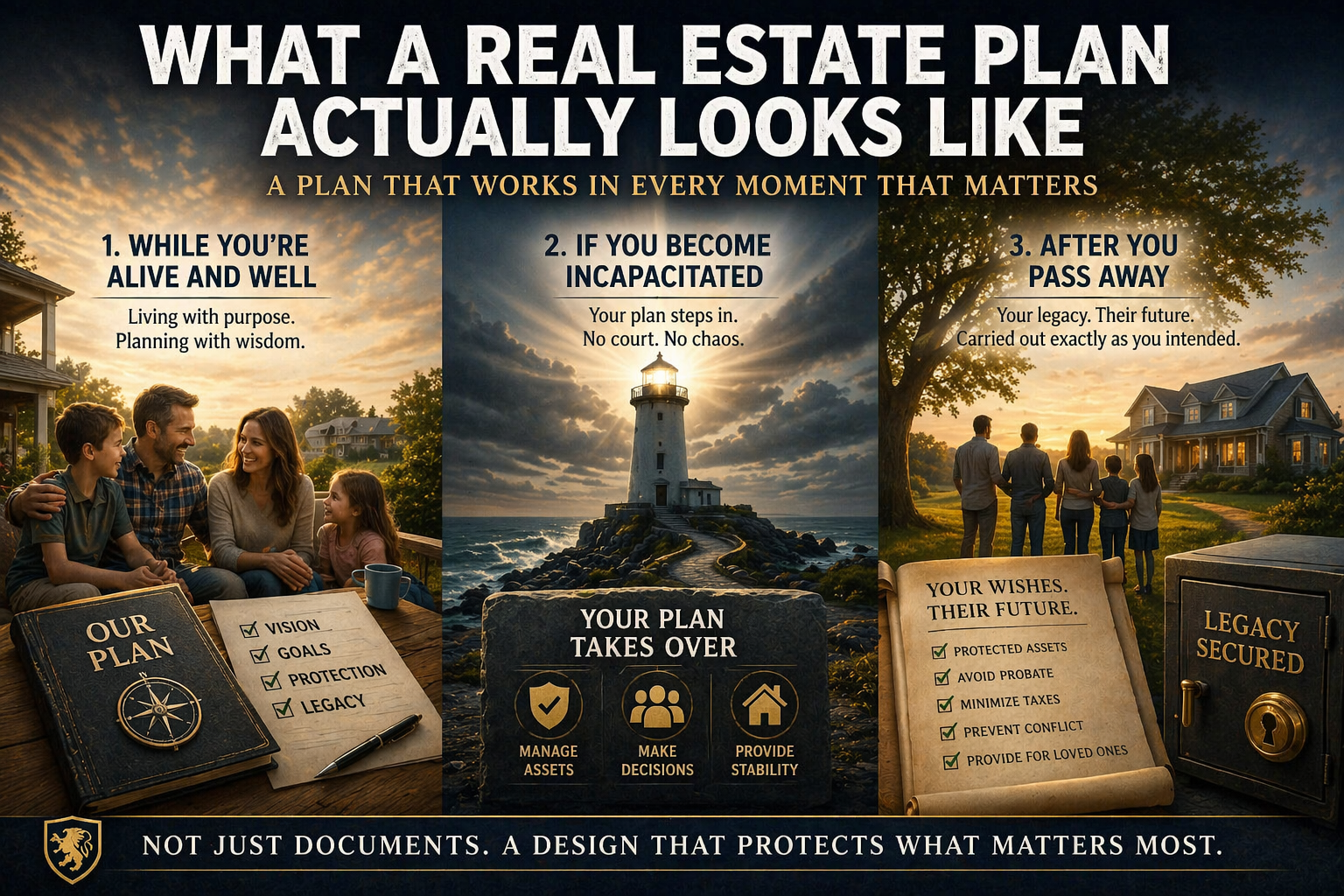
A real estate plan has to work in three moments: while you’re alive and well, if you become incapacitated, and after you pass away. Most people only plan for the third. That’s a mistake. Incapacity is often where families face the most confusion, cost, and court involvement. If your plan doesn’t work in all three phases, it’s not complete.
Control vs. Convenience
People rely on wills and beneficiary designations because they’re convenient. But convenience and control are not the same thing. Convenience says this is easy to set up. Control says this will work when it matters. A real estate plan prioritizes control, because your family doesn’t need easy—they need certainty.
The Parable of the Strong house
A man built a house for his family using the cheapest materials and the quickest methods. It looked fine from the outside. “Good enough,” he said. Then the storm came. The roof leaked, the walls cracked, the foundation shifted. The house didn’t fail because it was built—it failed because it wasn’t built to endure. Most estate plans are like that house. They look fine until pressure hits.
What a Real Plan Actually Does
A proper estate plan doesn’t just distribute assets—it answers hard questions ahead of time. Who is in charge if you can’t act? How are decisions made without court involvement? How are assets protected for your children? How do you prevent conflict before it starts? How do you ensure your wishes are carried out exactly as intended? It brings everything under one coordinated structure.
It’s Not About Wealth—It’s About Responsibility
Estate planning isn’t just for the wealthy. It’s for anyone with a home, children, savings, or people they care about. If you have something—and someone—you have an estate. And you have a responsibility to protect it.
Why Most People Don’t Have This
Not because they don’t care, but because they were told a will was enough, sold convenience instead of completeness, or never knew what questions to ask. So they did what seemed reasonable—and stopped too soon.
The Bottom Line
A real estate plan is not about documents. It’s about control, protection, and certainty across every stage of life. It’s built to work when things go wrong—not just when everything goes right. And most importantly, it ensures your family doesn’t have to figure things out when you’re no longer there to help them.