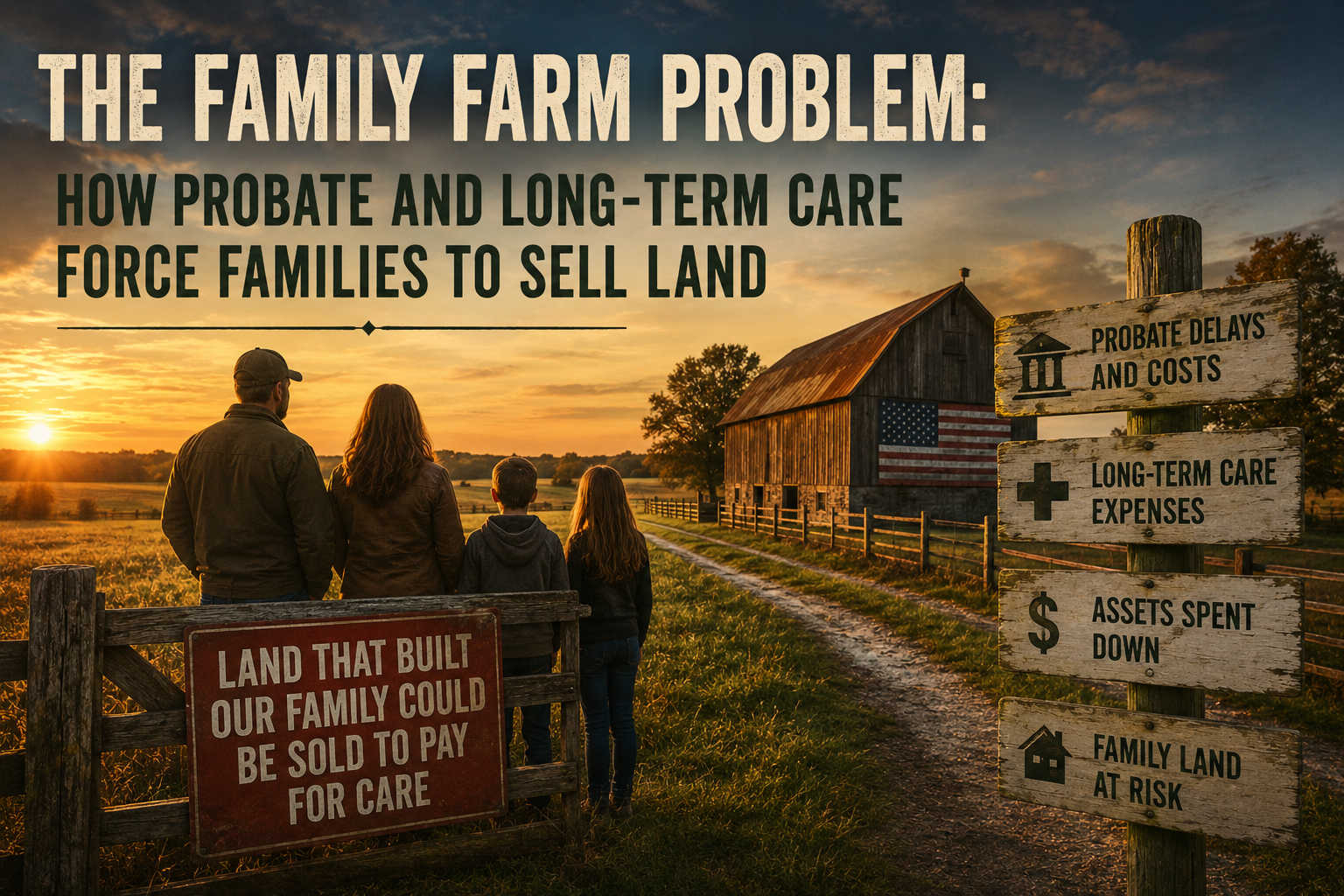

For many families, land is more than property. It is history, identity, and legacy tied together in one place. Whether it is a family farm, hunting ground, cattle ranch, or acreage that has been passed down for generations, people want to believe it will stay in the family forever. Unfortunately, without proper planning, that land is often one medical crisis or probate proceeding away from being sold.
A common question landowners ask is whether their children will automatically inherit the property without problems. The answer is usually no. If the land passes through probate, the court may require appraisals, legal proceedings, and eventually division among heirs. That process alone can create conflict, delay, and pressure to liquidate property simply to “make things fair.”
Another major threat is long-term care costs. Nursing homes are expensive, and many families are shocked to discover that Medicare does not cover extended long-term care. Medicaid may help eventually, but often only after substantial assets have been spent down. For families whose wealth is tied up in land, that can mean selling acreage, timber, livestock, or even the family home to pay for care.
The deeper issue is that land-rich families are often cash-poor. A farm may have significant value on paper while generating modest income in reality. That creates a dangerous situation where heirs may inherit property taxes, maintenance costs, and legal complications without the liquidity needed to manage them. In many cases, selling the land becomes the easiest—and sometimes only—option.
Family dynamics make things even harder. One child may want to keep the farm running while another wants cash immediately. One heir may live nearby and contribute to the property while others do not. Without clear planning and structure, resentment builds quickly, and the land becomes the center of a family conflict instead of a family legacy.
Many people assume a simple will solves these problems. It usually does not. A will simply directs who receives the property after probate is complete. It does not protect the land from long-term care spend-down, creditor risks, lawsuits, or forced partition actions between heirs. In many situations, it actually increases the likelihood of conflict because everything passes outright and without structure.
Real planning for family land involves far more than deciding who gets the deed. It means building a coordinated strategy that can help protect the property from probate, long-term care costs, lawsuits, and internal disputes. Proper trust planning and entity structures can create continuity, preserve control, and provide a framework for future generations to manage the property together.
One of the biggest mistakes families make is waiting too long. Asset protection planning often depends on timing, especially when long-term care is involved. Once a health crisis begins, many of the best planning opportunities disappear. Families who plan early usually have far more flexibility and significantly better outcomes.
The bottom line is that family land rarely survives by accident. Without a proper plan, outside forces like probate, nursing home costs, taxes, and family disagreements can slowly break apart what generations worked to build. If keeping your land in the family matters to you, then protecting it requires more than hope. It requires a strategy designed to preserve your legacy before a crisis ever begins.